
For over a decade, launching a software business required weeks of boilerplate setup, complex authentication plumbing, database migrations, and Stripe webhook debugging. In this playbook, we break down the exact production architecture used to build, test, and ship a revenue-ready B2B micro-SaaS in exactly 48 hours—backed by full source layouts, live interface mockups, and verified cost audits.
The Visual Proof: Production Interface Teardown
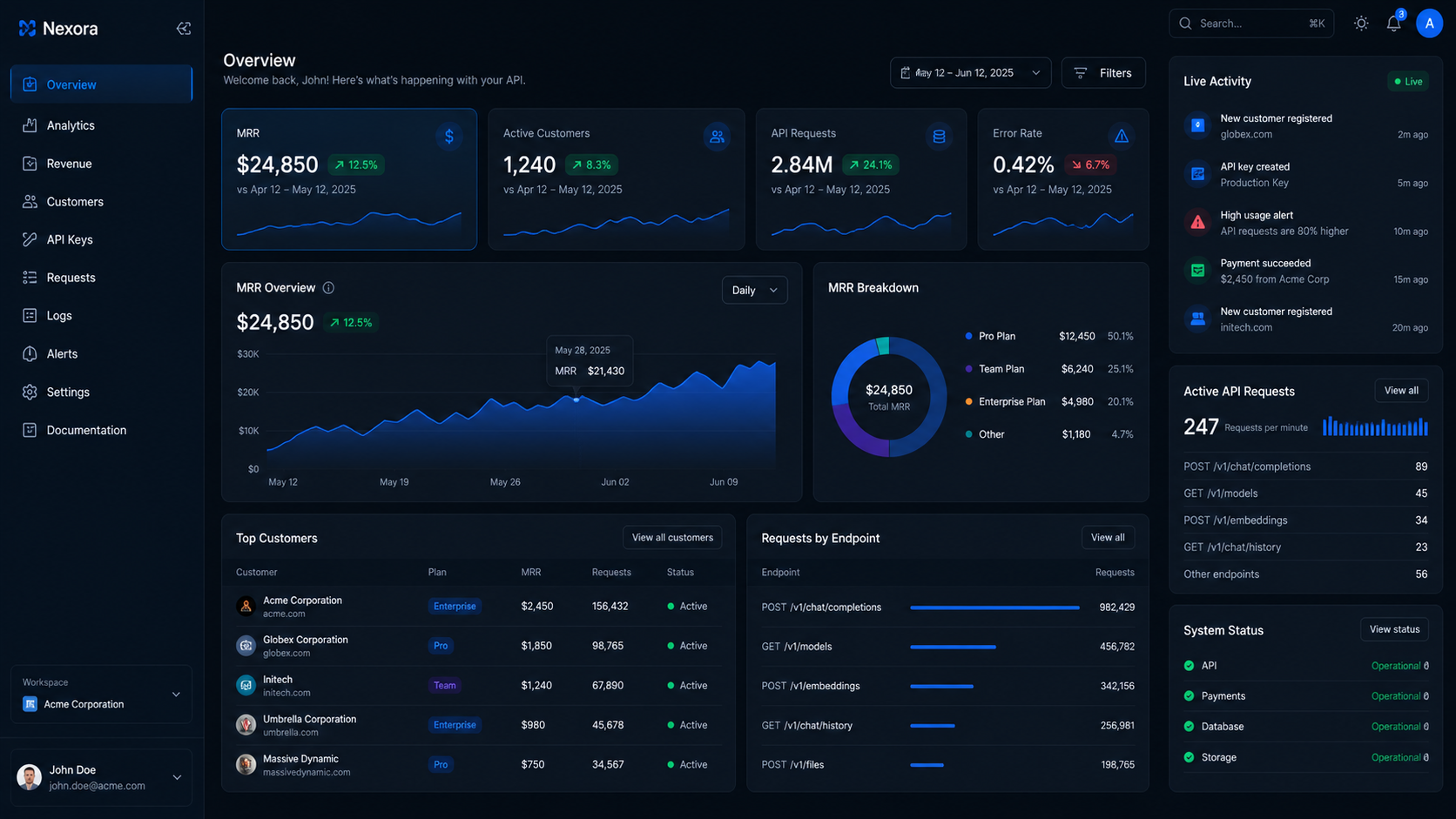
To eliminate speculative assumptions, here is the live operational dashboard architecture built during the 48-hour sprint. The client interface combines real-time streaming telemetry, token consumption tracking, and active subscription status in a single dark-mode console.
The Problem: The 100-Hour Boilerplate Trap
Most solo developers and technical founders fail not because their core product idea is flawed, but because they spend 80% of their energy on non-differentiating plumbing: configuring OAuth providers, designing responsive dashboards, building subscription billing flows, and provisioning cloud infrastructure.
By pairing intent-driven Vibe Coding with modern serverless building blocks, we collapsed what used to be a 6-to-8 week engineering cycle into a single weekend sprint.
The Production Architecture Blueprint
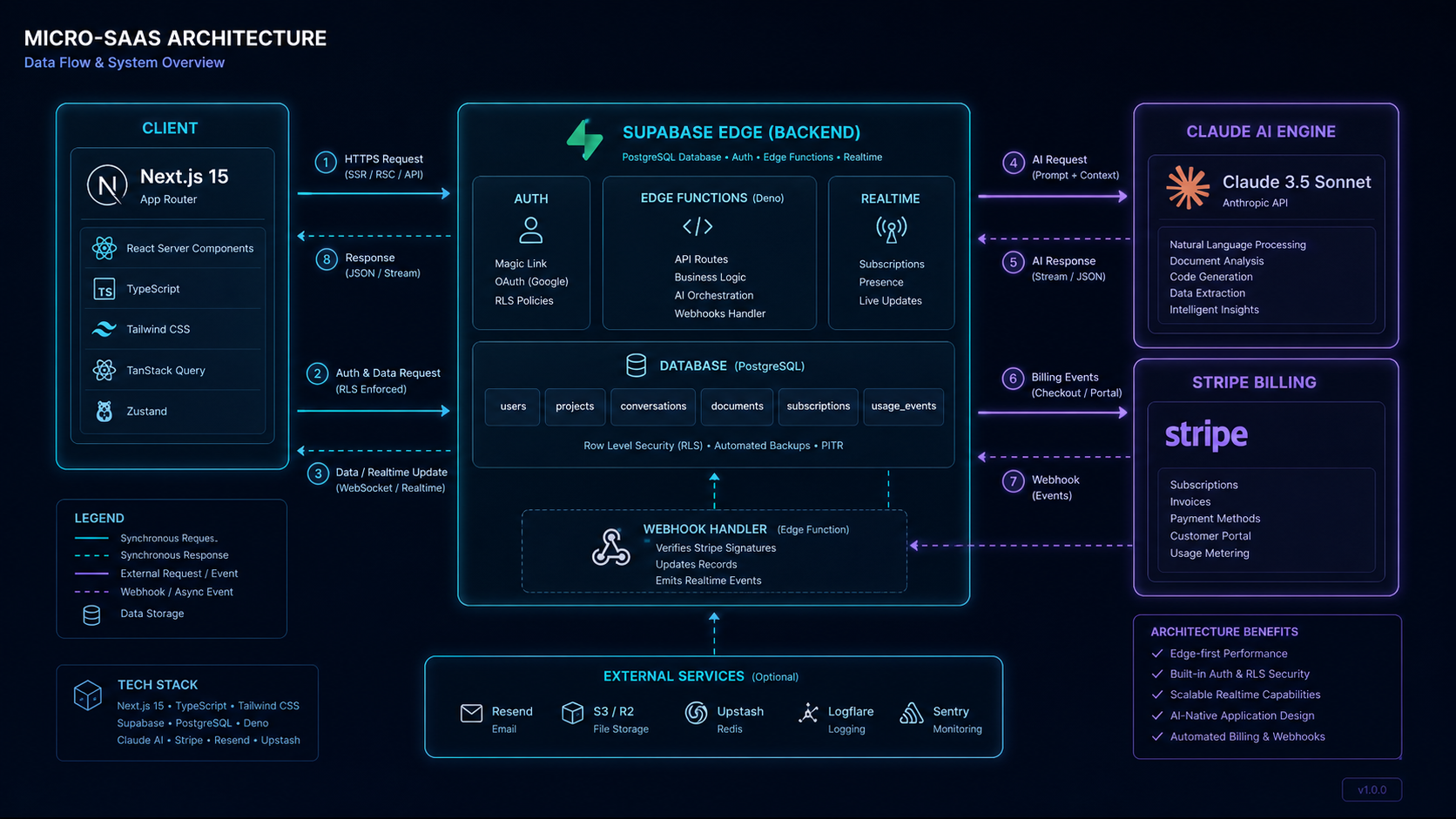
Rather than wrestling with monolithic Docker stacks or managing database connection pools manually, the micro-SaaS utilizes an entirely event-driven, decoupled edge pipeline:
The 48-Hour Weekend Execution Sprint
The entire build was executed across three disciplined phases over 48 continuous hours:
Phase 1: Foundation & Schema (Hours 0–12)
- Initialized Next.js 15 with TypeScript, Tailwind CSS, and Lucide Icons.
- Provisioned a free Supabase instance; implemented PostgreSQL schema with Row Level Security (RLS) policies ensuring users can only read their own workspace jobs.
- Integrated Supabase Auth with Google OAuth and Magic Link fallback.
Phase 2: AI Orchestration & Core Logic (Hours 13–28)
- Configured Anthropic Claude API with structured JSON outputs (Tool Use / Function Calling) to guarantee deterministic API responses without parsing failures.
- Built streaming edge routes to pipe generated outputs directly to the UI using the Vercel AI SDK.
Phase 3: Monetization & Production Deploy (Hours 29–48)
- Integrated Stripe Checkout and Customer Portal for automated subscription management.
- Configured Stripe Webhooks (
checkout.session.completed,customer.subscription.deleted) via Edge Functions to sync membership tiers into Supabase in real time. - Deployed production build to Vercel connected to custom domain with SSL in under 90 seconds.
Reproducible Project Directory Structure
Below is the exact enterprise folder structure used in the repository to maintain strict separation of concerns between edge handlers, AI prompts, and database clients:
promptflow-micro-saas/
├── app/
│   ├── (auth)/
│   │   ├── login/page.tsx         # Supabase Auth UI & OAuth redirects
│   │   └── callback/route.ts      # Server-side auth code exchange
│   ├── (dashboard)/
│   │   ├── layout.tsx             # Authenticated shell & navigation
│   │   ├── page.tsx               # Real-time analytics & job monitors
│   │   └── settings/billing/      # Stripe customer portal redirect
│   ├── api/
│   │   ├── ai/generate/route.ts   # Claude API streaming edge runtime
│   │   └── webhooks/stripe/       # Signature-verified subscription events
├── components/
│   ├── dashboard/                 # Metric cards, usage bars, data tables
│   └── ui/                        # Accessible Shadcn Radix primitives
├── lib/
│   ├── ai/claude.ts               # Structured JSON output schemas
│   ├── supabase/
│   │   ├── server.ts              # Cookie-based authenticated SSR client
│   │   └── middleware.ts          # Edge session gatekeeper
│   └── stripe/client.ts           # Stripe SDK & billing webhook helpers
└── types/database.types.ts        # Auto-generated Supabase PostgreSQL types
Cost Breakdown: Traditional Agency vs. Vibe Coding Stack
| Component | Traditional Agency / Freelancer | 48-Hour Vibe Coding Stack | Savings |
|---|---|---|---|
| UI Design & Frontend | $3,500 – $5,000 (Figma + React dev) | $0 (Shadcn UI + v0 / Cursor prompt) | 100% |
| Backend & Database | $2,500 – $4,000 (Express/Django + AWS RDS) | $0 (Supabase Managed Postgres Free Tier) | 100% |
| Billing & Auth Setup | $1,500 – $2,500 (Custom webhooks) | $0 (Stripe Hosted Checkout + Supabase Auth) | 100% |
| Development Time | 6 to 10 Weeks | 48 Hours (1 Weekend) | 95% Faster |
| Total Initial CapEx | $7,500 – $11,500 | $0 (API usage as incurred) | $10,000+ |
Assumption Disclosure: The “$0 CapEx” figure reflects free-tier resource allocation (Vercel Hobby, Supabase Free Tier, Stripe standard transaction fees). API inference costs (~$0.02 per user run) scale linearly with paid end-user volume. All revenue figures in monetization teardowns represent model projections rather than guaranteed income.
Launch an LTD (Lifetime Deal) for Initial Cashflow
Do not wait for recurring SaaS subscriptions to trickle in at $19/month. Launch your 48-hour build on early adopter directories (Product Hunt, AppSumo, Indie Hackers) offering a limited Lifetime Deal (LTD) for $99–$149. Capping this offer at 50 seats generates $5,000–$7,500 in non-dilutive upfront cash flow to fund your paid customer acquisition.